In Parashat Teruma, God commands the nation of Israel to construct four holy vessels for use in the Mishkan: the Aron (Ark), the Shulhan (Table), the Menorah (Lampstand) and the Mizbe’ah (Altar). Regarding the first three vessels, the Torah lists not only the technical details on how they are to be built, but also how they are to be used –
- And deposit in the Ark [the tablets of] the Pact which I will give you (25:16)
- And on the table you shall set the bread of display, to be before Me always (25:30)
- Make its seven lamps—the lamps shall be so mounted as to give the light on its front side (25:37).
The exception is the mizbe’ah, the altar, where the Torah does not explain its purpose at all.
One explanation for this might be that the purpose of the mizbe’ah is evident and well-known. At that time, offering sacrifices was viewed as a basic human need, and the fact that sacrifices were to be brought in the Mishkan was hardly a novel concept. It must have been obvious to everyone that sacrificial offerings would have their place in the Mishkan.
The need to connect with God by means of sacrificial offerings – as a thanksgiving, for atonement and so forth – was perceived to be a universal need. We find sacrifices described in the Torah in Sefer Breishit. Kayin and Hevel bring sacrifices (according to the Midrash, Adam also brought a sacrifice). The Torah records: “Then Noah built an altar to the LORD and, taking of every clean animal and of every clean bird, he offered burnt offerings on the altar” (Bereishit 8:20). Avraham was commanded to bring sacrifices: “Bring Me a three-year-old heifer, a three-year-old she-goat, a three-year-old ram, a turtledove, and a young bird” (Bereishit 15:9) – see Midrash Tanhuma, Terumah 10.
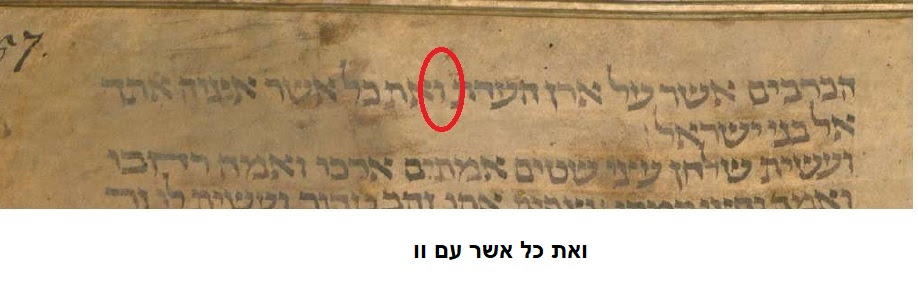
Yitro also brought sacrifices: “And Yitro, Moshe’s father-in-law, brought a burnt offering and sacrifices for God; and Aharon came with all the elders of Israel to partake of the meal before God with Moshe’s father-in-law” (Shemot 18:12). The nation of Israel brought sacrifices in the desert even before there was a Mishkan: “Moshe then wrote down all the commands of the LORD. Early in the morning, he set up an altar at the foot of the mountain ... He designated some young men among the Israelites, and they offered burnt offerings and sacrificed bulls as offerings of well-being to the LORD” (Shemot 24:4-5).
According to this, the altar and the offerings were the central point of the Mishkan. All the rest served simply as background to the central sacrificial service.
But we can also suggest another approach explaining why the purpose of the mizbe’ah is not mentioned in the Torah.
It is well-known that the prophets complained and railed against the people’s inclination to make the sacrificial service their main connection with God, while ignoring sins and injustice in their communities: “What need have I of all your sacrifices?” Says the LORD. “I am sated with burnt offerings of rams, And suet of fatlings, And blood of bulls; And I have no delight In lambs and he-goats. That you come to appear before Me— Who asked that of you? Trample My courts no more; Bringing oblations is futile, Incense is offensive to Me. New moon and sabbath, Proclaiming of solemnities, Assemblies with iniquity, I cannot abide” (Isaiah 1:10-13). The prophet’s demand is clear: “Learn to do good. Devote yourselves to justice; Aid the wronged. Uphold the rights of the orphan; Defend the cause of the widow.”
Similar problems appear in Second Temple times. The Tosefta relates that jealousy in the Temple led to dangerous conflicts: “An incident occurred where there were two priests who were equal as they were running and ascending the ramp. One of them reached the four cubits before his colleague, who then, out of anger, took a knife and stabbed him in the heart.
The father of the boy, i.e., the young priest who was stabbed, came and found that he was still convulsing. He said: May my son’s death be an atonement for you. But my son is still convulsing and has not yet died, and as such, the knife, which is in his body, has not become ritually impure through contact with a corpse. If you remove it promptly, it will still be pure for future use. The Tosefta comments: This incident comes to teach you that the ritual purity of utensils was of more concern to them than the shedding of blood.”
(Bavli Yoma 23a)
Even as his son was dying, the father’s only concern was the ritual purity of the Temple vessels. This damning story attests to a warped value system. Concerns with ritual of purity and impurity, of sanctity and sacrificial offerings can become the sole concern, even at the cost of human life.
Rabbi Isaac Arama, author of the commentary Akeidat Yitzhak, understands that the Torah’s commandment to erect a mizbe’ah includes sensitivity to the challenges and complications that come with it. He focuses on two elements of the commandment: the requirement to make pails for removing the ashes (see Shemot 27:3) and the need for the kiyor – the washing basin. These vessels were made to collect the refuse that is the byproduct of the offerings and to prepare oneself for that service. He writes:
“You shall make the altar of acacia wood, five cubits long and five cubits wide—the altar is to be square—and three cubits high…Make the pails for removing its ashes…
This teaches proper behavior regarding the constant breakdown and loss,
When living animals are brought to be destroyed and turned into ash.
And since even the best in this complex world are branded with the defilement of physicality and improper deeds,
The washing basin was stationed there to allow them to wash their hands and feet upon entering.”
(Akeidat Yitzhak, Terumah, Gate 48)
The Torah hints to a difficult reality and to the symbolic possibility of breakdown. The mizbe’ah will be the cause of death for many animals who will be turned to ash to allow the sacrificial service to take place. Additionally, the established Temple service may cause some to miss the point. Atonement and purity must be accompanied by acts of cleansing – cleansing of one’s physical body, but also cleaning one’s heart. Thus, the main point of the sacrificial service is hinted to by the service itself – the draining of blood and ashes; the broken, crushed, heart; cleansing and purity.