הסיבה לכל הבעיות


חגי הוא הנביא הראשון משלושת נביאי הבית השני – חגי זכריה ומלאכי, המכונים בפי חז"ל 'נביאים האחרונים'. נבואות חגי הכלולות בספר נאמרו כולן בשנת שתים לדריוש, שמונה עשרה שנה לאחר הצהרת כורש (520 לפנה"ס), בפרק זמן קצר ביותר של כארבעה חודשים (א' אלול עד כ"ד בכסליו).

הנבואות סובבות בעיקר סביב בניין בית המקדש השני. התמונה העולה מנבואות חגי משרטטת מצב עגום הנובע מהפער שבין החזון הגדול והציפיה לגאולה שהלהיבו את שבי ציון ששבו לארצם לאחר גלות בבל, לבין המציאות הקשה שעמה התמודדו בפועל. חגי מתמודד עם בעיית היאוש וחוסר המוטיבציה בעם לבניית המקדש, ומבקש להפיח בו תקווה ורצון למרות המציאות הקשה השוררת בארץ. נבואותיו פונות לעם ולמנהיגיו – זרובבל בן שאלתיאל, הפחה מטעם השלטון הפרסי, ויהושע בן יהוצדק הכהן הגדול.


'הָעָם הַזֶּה אָמְרוּ לֹא עֶת בּאֹ עֶת בֵּית ה' לְהִבָּנוֹת' (א',ב) בנבואתו הראשונה מתמודד חגי הנביא עם הבעיה הראשונה בדרך לבניית המקדש.

1. עיינו בדברי הנביא ובדקו מהו שורש טענת העם כנגד בניית המקדש בעת הנוכחית? (ראו בייחוד פסוקים ד, ו, ט).

2. כיצד מתמודד הנביא עם טענה זו ומהפך אותה? היעזרו בהתייחסות למילה 'עת' בדברי העם (ב) ובדברי הנביא (ד) ושימו לב לשימוש הדו-משמעי במילה 'בית' המופיעה שבע פעמים בנבואה (בייחוד פסוקים ד, ט). ראו גם את דברי רש"י: 'כל זה בשביל חורבן ביתי הוא. והבא מעט - בעון בכורים שבטלו. אכול ואין לשבעה - בעון ביטול מנחות. שתו ואין לשכרה - שניטל טעם היין לפי שבטלו הנסכים. לבוש ואין לחום לו - בעון בגדי כהונה שבטלו'. מצודות: 'וארצה בו - עם כי יהיה קטן אהיה מרוצה בו ואתכבד על ידו'.


למעבר לדף הלימוד המלא מתוך התכנית "מתן על הפרק"

Volver al capítulo

מה היה חסר בבית המקדש השני?

"עֲלוּ הָהָר וַהֲבֵאתֶם עֵץ וּבְנוּ הַבָּיִת וְאֶרְצֶה בּוֹ וְאֶכָּבְדָ [וְאֶכָּבְדָה] אָמַר ה'" (חגי א', ח)


תלמוד בבלי מסכת יומא דף כא עמוד ב

... והאמר רב שמואל בר איניא:

מאי דכתיב [=מהו שכתוב] "וארצה בו ואכבד", וקרינן [=ואנו קוראים] "ואכבדה"? מאי שנא דמחוסר ה"א [=במה נשתנה שמחוסר ה"א]?

אלו חמשה דברים שהיו בין מקדש ראשון למקדש שני, ואלו הן:

ארון וכפורת וכרובים,

אש,

ושכינה,

ורוח הקודש,

ואורים ותומים 


Volver al capítulo

הגיע הזמן


הבעיות הקשורות בלוח הזמנים של ראשית ימי הבית השני ובנבואות חגי, וההשוואות לספרי עזרא-נחמיה הולידו סברות שונות בדבר השלבים השונים של שיבת-ציון. הקשה שבשאלות היא, כיצד ייתכן שחגי וזכריה אינם מזכירים כלל את העלייה הראשונה בימי כורש, מדוע אין הם רואים את בניין הבית כהמשך הגשמת עצת האלוקים שהחלה בעבר?

דומה שנצליח להשיב על כך אם נרד לעומק המצב שהשתרר בירושלים עם הפסקת הבנייה. מלאי התלהבות משיחית באו העולים, הזקנים עוד זכרו את תפארת העבר, והנה מאיגרא רמא של נכונות למעשים גדולים בא יום הקטנות, ולא זו אף זו: משבר כלכלי, חוסר ביטחון, התגרות מצד עם הארץ, ועל הכל – הפסקת העבודה. וקל לשער עד כמה היתה קשה עמדת הנביא בקראו להתנערות מאבק הקטנות שדבק בהם זה כשמונה-עשרה שנה.

נקודת המפתח לאמונה בגאולה נעוצה הייתה בדברי ירמיהו אשר שלח לגולת בבל: "כי לפי מלאות לבבל שבעים שנה אפקֹד אתכם והקימותי עליכם את דברי הטוב להשיב אתכם אל המקום הזה" (ירמיהו כ"ט, י). שבעים שנה אלו הסתיימו בשנת אחת לכורש. אולם בין עליית בבל לחורבן ירושלים חלפו שמונה-עשרה שנה, דהיינו שעד להכרזת כורש חלפו רק חמישים ושתיים שנה מתוך שבעים השנה הצפויות, ועדיין חסרים אנו שמונה-עשרה שנה להגשמת הנבואה על תקומת ירושלים.

חגי ראה איפוא בעליית דריוש בשנת 520, י"ח שנה אחרי שנת 538, את סיום תקופת הגלות הכפולה: בבבל תחת שלטון הבבלים, ובארץ יהודה תחת אימת עם-הארץ, והוא התעלם במתכוון מכל שהיה לפניו. הוא ראה עצמו נושא בשורה חדשה על ראשיתה של תקופה חדשה, אשר סמלה הגדול הוא בית ה' האחרון אשר כבודו גדול יהיה אפילו מן הראשון.


נערך ע"י צוות אתר התנ"ך

לקריאת המאמר המלא מתוך "עיונים בפרקי מקרא" ששודרו בקול ישראל

Volver al capítulo

שכונות בירושלים בנבואת צפניה

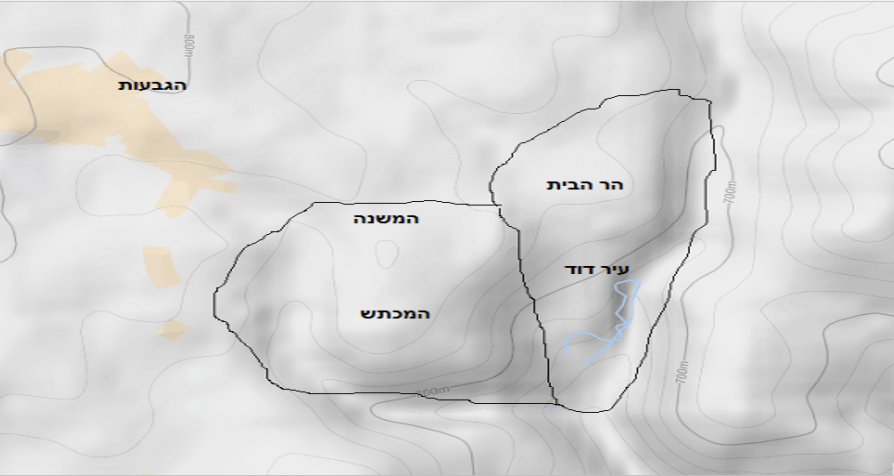
באיור המובא לפניכם מתוארות שכונות בירושלים - המשנה, המכתש והגבעות, המוזכרות בנבואת צפניה בפרק א' פס' י-יא:

"וְהָיָה בַיּוֹם הַהוּא נְאֻם ה' קוֹל צְעָקָה מִשַּׁעַר הַדָּגִים וִילָלָה מִן הַמִּשְׁנֶה וְשֶׁבֶר גָּדוֹל מֵהַגְּבָעוֹת. הֵילִילוּ יֹשְׁבֵי הַמַּכְתֵּשׁ כִּי נִדְמָה כָּל עַם כְּנַעַן נִכְרְתוּ כָּל נְטִילֵי כָסֶף" 

יש לשים לב שהמכתש והמשנה נמצאות בתוך החומה ואילו הגבעות הן שכונות מחוץ לחומה.

משמעות שמות השכונות -
המשנה: שכונה שניה שנבנתה בירושלים בנוסף לשכונת המגורים המקורית שהיתה בעיר דוד.
המכתש: שכונה הבנויה באזור נמוך יותר.
הגבעות: שכונות הממוקמות מחוץ לחומה באזורי הגבעות שמצפון לעיר.

במאה הקודמת היה וויכוח על גודלה של ירושלים בימי בית ראשון, היו חוקרים שטענו שירושלים השתרעה על שטח הר הבית ועיר דוד בלבד (זו דעת ה'מצמצמים'). לעומתם, היו חוקרים ('המרחיבים') שטענו שירושלים השתרעה על שטח שהיום הוא חלק מהרובע היהודי. השערת 'המרחיבים' קיבלה אישור בחשיפת החומה הרחבה ברובע היהודי.


Volver al capítulo

Yaakov's Concern About Violence

    The Torah in the beginning of Parashat Vayishlach describes the fear Yaakov experienced upon hearing that his brother was approaching with an army of three hundred men: “Yaakov was very frightened, and he was distressed” (32:7).  Rashi, citing the Midrash, famously comments that the two verbs in this verse – “vayiyra” (“he was frightened”) and “vayeitzer” (“he was distressed”) – refer to two different concerns that weighed on Yaakov’s mind.  He was “frightened” because of the threat to his life, and he was “distressed” over the prospect that he might be compelled to wage war and take lives.  Whereas according to the simple reading of the text these two verbs appear to emphasize the extent of Yaakov’s anxiety upon learning of his brother’s approach, the Sages explain the second verb as referring not to the concern for Yaakov’s own life, but rather about the possibility of his being forced to kill in battle.

            The clear message conveyed by the Midrash in these comments is the obligation to maintain ethical standards even in the heat of battle, and to appreciate and respect the sanctity of human life even when circumstances necessitate killing.

            More generally, the Midrash here reminds us that our ethical and religious obligations must continue to concern us even in periods of dire crisis.  In emergency situations, our natural inclination to focus exclusively on resolving the crisis could cause us to suspend ordinary constraints and to act without discretion.  The emotional weight of the crisis makes it tempting to free ourselves of the burden of conscience and ethical and religious responsibility.  Chazal interpret “va-yeitzer lo” to mean that even in the face of an immediately life-threatening situation, which would likely necessitate taking up arms and fighting to kill, Yaakov’s conscience remained firmly implanted in his mind, and he was just as concerned about his ethical responsibilities as he was about his basic responsibility to protect himself and his family.  Even in a crisis situation, he retained his commitment to ethics and discipline.

            We might read Yaakov’s emotional exchange with Shimon and Levi later in the parasha in a similar vein.  Yaakov berated his sons for their deadly retaliatory attack on the city of Shekhem after their sister’s abduction and violation, to which they angrily responded, “Shall our sister be treated like a harlot?” (34:31).  They argued that although under normal circumstances their actions in Shekhem would certainly be condemnable, it was justified and warranted in light of what had happened to their sister and the urgent need to defend the family’s honor.  Although Yaakov chose not to respond, the likely response to their claim is that no, even a situation as tragic and dire as Dina’s defilement does not justify such acts of violence.  Not everything becomes permissible in times of crisis.  Even under harsh, difficult circumstances, we must carefully consider the prudence of the measures we take, and not absolve ourselves of our moral and religious obligations in tending to the crisis at hand.


Volver al capítulo

Rav Cherlow on Yaakov's Preparations to Meet Esav

       Rashi, in his commentary to Parashat Vayishlach (32:9), cites the famous comment of the Midrash that as Yaakov anticipated his reunion with his brother, he “prepared himself in three matters: a gift, prayer, and war.”  Yaakov undertook three different measures in preparation for what he feared would be a hostile encounter.  He sent a bribe, recited an impassioned prayer to God, and mobilized for warfare.

            Rav Yuval Cherlow noted that these three measures, in a certain sense, contradict one another.  Prayer in the face of crisis expresses the recognition of God’s power over the situation, and our absolute dependence on His grace, whereas sending bribes and preparing for war reflect a confident sense of self-sufficiency, or at least a recognition of the value and effectiveness of our efforts.  Offering gifts of appeasement to one’s enemy is an act of submission and helplessness, the precise opposite of mobilization for combat, which expresses the firm resolve to stand up for oneself and fight.

            Rav Cherlow then proceeds to explain the significance of Yaakov’s simultaneously employing these three contradictory strategies:

This structure is so characteristic of the Torah that we have: there is nothing which is always correct, except the first two Commandments, which constitute the foundation of everything, the only fixed foundation of Torat Yisrael.  All other topics are complex issues through which many different paths of God’s manifestation are expressed.

Yaakov’s complex, multifaceted approach to the feared confrontation with Esav may be seen as a model of the complex way with which we must deal with all the “Esav’s” we confront, the many different problems, issues and pressing matters that we must address both as individuals and as a people.  There is no single correct strategy or response to a difficult situation.  Often, different and even conflicting approaches must be balanced off one another in order to best deal with a complex issue.  Yaakov’s “triple strategy” should remind us to avoid overly simplistic formulas and solutions to life’s challenges, and to recognize that complex issues usually require a complex approach in searching for an effective solution.

Volver al capítulo

Dina and Tamar - Shekhem vs. Amnon

         The Torah in Parashat Vayishlach tells of the unfortunate incident involving Yaakov’s daughter, Dina, who was abducted and violated by Shekhem, the prince of the city bearing the same name, Shekhem.  To retaliate for the crime, two of Dina’s brothers, Shimon and Levi, fool the people of Shekhem into undergoing circumcision in exchange for allowing Shekhem to marry Dina, and then capitalize on their frailty by launching an assault and killing the entire male population of the city.

            Several intriguing parallels exist between this story and another tragic instance of rape recorded in the Tanakh – the rape of Tamar, King David’s daughter, by her half-brother Amnon, as told in Sefer Shemuel II (chapter 13).  In both instances, the offender was the son and heir apparent of the ruling monarch – Shekhem was the son of the city’s ruler, and Amnon was David’s son.  The fathers of both victims – Yaakov and David – did not react to the crime, but the victims’ brothers violently avenged their sisters’ honor: Shimon and Levi retaliated by killing the men of Shekhem, and Avshalom, Tamar’s brother, slew Amnon.  Moreover, both retaliations were done by way of false friendly gestures: Shimon and Levi deceptively offered Dina’s hand in marriage as well as partnership with the city of Shekhem, and Avshalom joined Amnon’s wool-shearing celebration.  We also find a clear textual parallel linking the two contexts.  Before she is violated by her brother, Tamar pleads, “Do not rape me, for this is not done in Israel; do not commit this disgraceful act” (Shemuel II 13:12).  Her plea is reminiscent of the Torah’s description of the reaction of Dina’s brothers to her abduction: “The men were grieved…for a disgrace was committed in Israel…such a thing is not to be done” (34:7).

            The Midrash, in Bereishit Rabba (80:26), develops this connection further, by depicting Dina as “borrowing” the plea Tamar would make centuries later.  After Shimon and Levi’s deadly assault on Shekhem, the Midrash relates, they came to bring Dina out of the city, but she was hesitant to leave, and pleaded, “Va-ani ana olikh et cherpati” – “But where shall I go with my shame?” – the same words uttered by Tamar in pleading with her brother to desist.  Dina, as a rape victim, was concerned about her future marriage prospects, as Shekhem, who desperately wished to marry her, had been killed by her brothers.  In the ancient world victims of rape were considered undesirable as marriage partners, and for this reason, the Torah requires a rapist to marry the victim (Devarim 22:29).  Though this seems counterintuitive, this law was designed to ensure that the woman would be cared for after her violation.  Dina would thus not leave the palace, the Midrash relates, until Shimon agreed to marry her.  This Midrashic passage not only “imports” a verse from the story of Amnon and Tamar to the context of Dina, but also adds another important parallel.  Tamar also pleaded with Amnon after the crime not to send her away, just as the Midrash describes Dina as begging her brother to marry her after Shekhem’s assassination.

            This parallel also underscores the crucial difference between the two incidents.  Amnon rejects Tamar’s pleas, and, in disgust, sends her away.  In Dina’s case, however, Shekhem strongly desired her hand in marriage even after the crime.  Whereas Amnon despised his victim after the act of defilement, Shekhem longed to be married to his victim.

            How might we explain this difference between the two offenders?  What are we to make of the fact that Shekhem, the gentile, at least had the decency to want to establish a lifelong relationship with the woman he forcefully violated, whereas Amnon threw Tamar out of his home immediately after using her to satisfy his lust?

            One possibility is that Amnon’s hostility toward Tamar after satisfying his lust was the product of intolerable pangs of conscience which Shekhem was incapable of feeling.  Amnon did not actually hate Tamar; overcome by guilt and shame, he hated himself, and in order to deal with those painful emotions, he transferred them onto Tamar, the source of his failure.  Shekhem, however, felt no such pangs of guilt.  In his society and mindset, royal figures were entitled to forcefully abduct women they desired, just as Pharaoh and Avimelekh abducted Sara.  For Shekhem, Dina continued to be an object of desire even after the crime, and she never became an object of shame as Tamar became for Amnon.

(Based on an article by Eitan Finkelstein)

Volver al capítulo

Yaakov's Struggle and Persistence

            The Torah in Parashat Vayishlach tells of the mysterious assailant who wrestles with Yaakov the night he crossed the Yabok River as he made his way back toward Canaan after his sojourn in Charan. The word used by the Torah in describing Yaakov’s fight with this assailant is “va-yei’aveik” – “he struggled” – which Targum Onkelos translates into Aramaic as “ve-ishtadal” (32:25).

            The Rambam makes reference to this translation in his commentary to the Mishna, where he explains the famous admonition in Pirkei Avot (2:5), “Be-makom she-ein anashim hishtadeil li-heyot ish” – “In a place where there are no men, endeavor to be a man.”  This passage is commonly interpreted to mean that if we find ourselves in a situation that demands bold action or leadership, we should not shy away from assuming the responsibility.  At times when there is nobody prepared to take necessary action or accept an urgently needed task, we must set aside humility and accept the challenges that need to be confronted.  

The Rambam, however, explains this rabbinic adage much differently.  He writes, “Accustom yourself and draw yourself toward the acquisition of good qualities, and since there are no people to teach you, you should teach yourself.  And the translation of ‘va-yei’aveik ish imo’ is ‘ve-ishtadal gavra imeih’.”  According to the Rambam, the Mishna instructs that we must be prepared to teach ourselves the proper way to act if there is no one available to teach us.  “In a place where there are no men” – when we cannot find anybody qualified to offer instruction and guidance – “endeavor to be a man” – then we must accept the challenge to exert the effort to teach ourselves.  

The unavailability of mentors and role models could offer us a convenient excuse to absolve ourselves of religious responsibility.  The Mishna therefore admonishes us, “Hishtadel,” which, as the Rambam infers from Targum Onkelos’ translation of “va-yei’aveik,” means to struggle and exert immense effort to overcome formidable challenges.

            There are many situations which do not naturally lend themselves to religious excellence, and are not conducive to advancing our growth in Torah study and observance.  The Mishna, as understood by the Rambam, exhorts us to follow the model of Yaakov’s wrestle with the angel – not to surrender, but to struggle, to exert maximum effort, to persist and do whatever is needed to overcome religious challenges and succeed.  The reality of “ein ish,” a situation which does not allow for easy achievement, does not absolve us of our duties, but rather calls upon us to engage in a struggle, with the confidence that we are capable of waging the battle against the adverse circumstances and surmounting all obstacles that stand in the way of spiritual achievement.

Volver al capítulo

Angels of Yaakov and Shabbat

      We read toward the beginning of Parashat Vayishlach of Yaakov’s trepidation upon hearing that Esav was approaching with an army of four hundred men.  Chizkuni, commenting to the Torah’s description of Yaakov’s fear (32:8), raises the question of why he did not feel assured by the presence of the angels that had joined him.  The final verse of Parashat Vayetze tells that after Yaakov took leave of Lavan, he was met by angels, and many commentators explain that these angels had come to protect him along his journey back home.  If so, Chizkuni asks, then why was Yaakov afraid?  Did he doubt the angels’ ability to defend him against his brother?

            Chizkuni cites those who explain that Yaakov was met by two angels – Michael, his “guardian angel,” and Samael, the “guardian angel” of Esav.  Michael had come to assist him, but Samael had come to assist Esav.  And so Yaakov had reason to fear.

            Chizkuni’s comments bring to mind the famous passage in Masekhet Shabbat (119b) that forms the basis of the widespread, cherished custom to sing “Shalom Aleikhem” before beginning the Friday night meal.  The Talmud relates that two ministering angels accompany a person home from the synagogue on Friday night, one “good” angel and one “bad” angel.  If the house is properly prepared for Shabbat, then the “good” angel blesses the family, and the “bad” angel is forced to answer “amen.”  But in the opposite case, the “bad” angel expresses his wish that the home should be in this state the following week, as well, and the “good” angel is forced to respond “amen.”  The Gemara here conveys the message that Shabbat, the “mekor ha-berakha” (source of blessing), can provide immense benefits to us and our families, as an opportunity to redirect our focus away from our work responsibilities and onto the more meaningful aspects of life, especially family and learning.  But these benefits are not guaranteed.  When Shabbat begins, a person is joined by two “angels” – he faces two possibilities: he can reap the priceless benefits that the Shabbat experience offers, or he could squander the opportunity and be left with nothing.

            Chizkuni’s description of Yaakov’s situation as he embarked on the next stage of his life perhaps teaches that this is true not only on Shabbat, but in life generally.  God sends us all many “angels,” such as our physical wellbeing, assets, skills, family and friends, free time, and so on.  But each “angel” can work either for us or against us – either “Michael” or “Samael” – depending on how we use them.  We must remember that with every “Michael” comes “Samael”; every blessing in our lives can also become a curse if it is not used properly.  Recognizing the potential blessing and curse latent within everything we have will help ensure that we utilize them all for beneficial purposes, and that all the “angels” God sends our way will be a source of success, security and prosperity for us and the entire nation.

Volver al capítulo

Yaakov's Fear and Struggle with the Angel

            The Torah in Parashat Vayishlach describes Yaakov’s preparations for his feared encounter with his brother, Esav, which included sending a large bribe, dividing his family and servants into two groups in case Esav attacks, and offering a prayer.  Afterward, we read that Yaakov arose in the middle of the night and journeyed across the Yabok stream with his family and possessions.  It was during that night when he was confronted by a mysterious assailant, an angel, who succeeded in injuring Yaakov’s thigh.

            The Rashbam comments that Yaakov’s intent was to travel a different route back to Canaan in order to avoid Esav.  Under the cover of night, Yaakov tried to escape from Esav by changing course.  God dispatched the angel to prevent Yaakov from escaping, and to inflict an injury to punish him for fleeing despite God’s promise of protection and clear instruction to return to Canaan without fear.  The Rashbam (32:29) compares Yaakov’s punishment to Moshe’s punishment for delaying his return to Egypt from Midyan, and the punishment brought upon Yona for trying to escape from his mission.

This general approach is also taken by Chizkuni, which might strike us as surprising in light of his earlier comments (to 32:8), explaining why Yaakov feared his encounter with Esav.  Chizkuni explained, based on the Midrash (Bereishit Rabba 76:2), that Yaakov feared because Esav came with the merit of kibbud av va-eim (honoring parents) which Yaakov did not have.  Throughout the years Yaakov spent in Charan, Esav tended to his parents, while Yaakov had no contact with them at all.  Yaakov feared that Esav might be worthier of God’s assistance than he was, and for this reason he was afraid.  Leaving aside the question of why this particular mitzva would have given Esav an “advantage” over Yaakov, we might also wonder why, according to Chizkuni, Yaakov was deserving of punishment for fleeing despite his legitimate concerns.  His fear was bone not out of mistrust of God, but rather out of a humble recognition of his limited achievements.  Why, then, was he punished?  (This question was raised and discussed by Rav Chaim Elazary, in his Darkhei Chayim.)

One answer, perhaps, is that our recognition of our shortcomings should never hamper our progress or our ability to fulfill God’s will.  Yaakov was unsettled by his perceived failure in the area of kibbud av va-eim, and we have much to learn from his fears about the importance of rigorous self-scrutiny and unforgiving introspection, but he was nevertheless taken to task for allowing these disquieting thoughts to divert him from the course charted for him by God.  If there is a route we must take, we should not allow our “baggage” to weigh us down and delay or sabotage the journey.

We are not given explicit divine guidance toward the particular routes we need to take in life, other than the body of mitzvot and halakhic obligations that we have received through our tradition. Nevertheless, we may learn from Yaakov’s injury not to allow the mistakes of our past to interfere with our quest for a successful and accomplished future.  We must maintain the delicate balance between honest self-evaluation and scrutiny, on the one hand, and, on the other, steady and confident progress and advancement.  

Memories of past mistakes are important reminders of our frailty and the need for improvement, but can also sow fear and self-doubt that hold us back.  Yaakov, according to Chizkuni, was crippled by his doubts, and thus suffered a crippling injury at the hands of God’s angel.  We must try to avoid the crippling effect of an engaged conscience, and use the recognition of our mistakes to move forward, rather than be held back.

Volver al capítulo

Pages

x

Lee el Tanaj cómodamente. ¡Instala nuestra App en tu pantalla de inicio!

📲 Instala nuestra App

Toca el botón de Compartir (el icono de un cuadrado con una flecha hacia arriba) en la barra de Safari, desliza hacia abajo y selecciona 'Agregar a la pantalla de inicio'.