

Mordekhai
Found 52 Search results
And Mordekhai Would Not Bow
Rabbi Yitzchak Etshalomתאריך פרסום: תשע"ב | |
Mordekhai's refusal to prostrate before Haman is the key to the plot of the Megilah - if he doesn't refuse, there is no decree, no Purim - and no Megilat Esther. Yet Mordekhai's actions are enigmatic and appear to have no justification. We will explore the various suggestions raised over the millenia to explain his refusal - and suggest another one.
Timeframe and Chronology
Chapter 1
Prof. Jonathan GrossmanThe story of Esther could begin with Haman's edict in chapter 3; the decision to begin the story with Ahashverosh's feasts and the choosing of Esther conveys the message that God puts a cure in place before the disease is inflicted, providing important information about the Jews of Shushan and King Ahashverosh that will enable a resolution of the problem.
Presentation of Mordekhai and Esther in Chapter 2
Chapter 2
Prof. Jonathan GrossmanThe midrash links the expositions introducing Mordekhai and Moshe, and Shaul and David. The text demonstrates that Mordekhai was chosen by God to save Am Yisreal. This article discusses the reason Esther is told to hide her identity, and whether Esther wanted to become queen.
"Mordekhai Did Not Bow, Nor Did He Prostrate Himself"
Prof. Jonathan GrossmanHow does the book assess Mordekhai's refusal to bow down to Haman? Is Mordekhai justified in his refusal? What is the reasoning behind his decision?
The Casting of the Lot
Prof. Jonathan GrossmanThis article explains the meaning and significance of the Lottery ("Pur"). The world of magic is often linked with Rachel and her descendants. Haman's lottery was performed during the celebration of the Babylonian New Year, and reflects a deterministic worldview. We will compare the Haman's lottery to the High Priest's lottery on Yom Kippur, and Joshua's lottery for dividing and distributing the land.
Does The King Know of Haman's Decree?
Prof. Jonathan GrossmanWhy does Mordekhai mention "the matter of the money" when he tells Esther about Haman's edict? An in-depth reading of the narrative describing Esther's second feast shows that Ahashverosh was probably unaware of Haman's edict to murder all the Jews.
What Happened to Hatakh?
Prof. Jonathan GrossmanMordekhai rent his clothing and cried a great and bitter cry. Mordekhai's cry is compared with Esav's, and the significance of renting one's clothing is discussed. Esther responds to her uncle's actions by sending him new clothing - confirming her distance from Mordekhai's cause. The gap between Mordekhai and Esther is expressed by the character of the messenger, Hatakh. Throughout the dialogue, Hatakh suddenly disappears. What is the significance of his disappearance?
Who is the Protagonist of Esther?
Prof. Jonathan GrossmanThe beginning of the Book of Esther presents Mordekhai as the protagonist of the story, but later Esther is the character that drives the plot. By the end of the book, they are parallel protagonists. King Ahashverosh is the Antihero, who pushes us to find the hidden protagonist - the King of Kings.
The Gallows
Prof. Jonathan GrossmanDeath by hanging is a punishment for treason. Haman, who is charged with the safety of the king, plots to accuse Mordekhai of treason, unaware that Mordekhai is "immune" to such accusations, while the king begins to suspect that Haman himself is plotting against him.
Mordekhai is Led on Horseback
Prof. Jonathan GrossmanWhat is the purpose of the story about Mordekhai being led on the horse? We will suggest various interpretations, and show that the narrative is the center of the story, marking the reversal of the plot. The biblical allusion to Halitza suggests an ironic reading of the sentence "Thus shall be done to the man whom the king wishes to honor."
"Also Harvona Is Remembered for Good"
Prof. Jonathan GrossmanWhat is the purpose of Charvona's character? Charvona appears as one of the eunuchs in Vashti's story, as well as an adviser here. In both stories he incites Ahashverosh's anger toward someone close, making room for Mordekhai and Esther.
Mordekhai in Haman's House, and Esther Goes Before the King Again
Prof. Jonathan GrossmanMordekhai is put in charge of Haman's house, and provided with access to Haman's plans to destroy the Jews. This lesson examines Esther's request from Ahashverosh: the wording of her request is compared to the phrasing used by the woman in Song of Songs and to the story of Yehuda.
Mordekhai's Letters
Prof. Jonathan GrossmanThis lesson will compare the letters sent by Mordekhai to those previously sent by Haman. The differences in the wording of the letters stems from the festive atmosphere in Mordekhai's letters, and the change the Jews undergo when they begin the process of resuming a national identity.
Indiscriminate Slaughter?
Prof. Jonathan GrossmanWhy did the fear of the Jews fall upon the nations? The chapter alludes to the Exodus and the conquests in Canaan. The war at the end of the book does not describe a massacre; the Jews only killed those who would have killed them. They were careful not to touch the loot, despite Ahashverosh's explicit permission. Finally, the number of casualties attests to a planned battle and not random killing.
Stages of Acceptance of the Festival
Chapter 9
Prof. Jonathan GrossmanThe detailed description of the process leading to the acceptance of Purim as a chag attests to the need to convince the public. Will Purim be celebrated on the 14th or 15th of Adar? How should the day be marked and celebrated? We will examine the various stages of accepting the holiday as described in the Megillah.
Stages of Acceptance of the Festival (continued)
Prof. Jonathan GrossmanShould the events in the city of Shushan be given a special status? Apparently the tension regarding setting a date for Purim reflects the tension between the Jewish center in exile and that in the Land of Israel. The process culminates in the Mishna, when two days are set for celebration - marking the significance of Shushan on the one hand, but basing the division on parameters relating to the Land of Israel and Joshua's conquest on the other.
Esther and the Book of Joshua
Prof. Jonathan GrossmanThe protagonists of the Book of Esther are described in similar terms as the protagonists of the Book of Joshua. This comparison places the story in perspective: every achievement is a story of survival, and even after being saved, the Jews of Shushan remain exiled.
The Greatness of the King, and the Greatness of Mordekhai
Chapter 10
Prof. Jonathan GrossmanEnding the book with Ahashverosh's greatness puts the story in perspective. This is the story of Ahashverosh and his kingdom - not a Jewish story. Mordekhai's greatness is entirely dependent on the king's whims. This viewpoint is reinforced by the many allusions to the story of Joseph throughout the Book of Esther: Joseph rose to the highest power imaginable, but after his death the Jews were enslaved in Egypt.
Shaul and Amalek
Haftarot: Zakhor
Rabbi Mosheh LichtensteinThe imperative to destroy Amalek has to follow the divine directive. By sparing the sheep, Shaul inserts personal considerations into the fulfillment of the commandment. He also runs the risk of desecrating God's name, because one might assume that the nation waged war against Amalek only for the loot they gained. Shaul believes wholeheartedly that he has observed God's commandment; he fails to understand that by giving in to the nation who requests the cattle he has failed as a king and leader. Generations later Mordekhai amends this error by avoiding the loot that is offered to the Jews.
A Better Smell and a Better World
Chazal's Preambles to Megillat Esther: Part 6
Rabbi Moshe Taragin | 23 minutesPesukim about shrubbery in Yeshayahu are interpreted as symbolizing Esther, Vashti, Mordechai, and Haman. Is Vashti evil? Why does she appear here? The symbolism in Yeshayahu suggests tangible, objective improvement. In addition to justice against the would-be destroyers of the Jewish people and Temple, the triumph of the righteous heroes cause an objective improvement to society at large.
The Golden Idol
Part 1
Rabbi Yaakov MedanIn order to override the conclusion of his dream regarding the transience of the Babylonian kingdom, Nevukhadnetzar constructs a golden idol. He believes that if all bow down to the idol, he will eternalize the Babylonian kingdom. The refusal of only three Jews is thus viewed as a threat to this plan, just as Mordekhai’s refusal to bow to Haman was viewed as a threat. Their refusal to bow to the idol leads them to be cast into the fiery furnace just as Avraham was cast into the furnace of Nimrod many years earlier according to the Sages. The first king of Babylon, Nimrod, and his tower that rose to the heavens, are compared to Nevukhadnetzar, the current king, and his gold idol that rose sixty cubits high.
On Kiddush Ha-Shem and Self-Sacrifice - Part 2
Rabbi Yaakov MedanPotential solutions for understanding Hananya, Misha’el and Azarya’s actions in contrast with the general behavior of the Jews at their time include: the permissibility as an act of piety to give up one’s life even if no obligation exists; the obligation to give up one’s life if the action is part of a decree to destroy one’s faith even if the action itself is not idol worship; and the obligation of leaders to give up their lives for an action that can be perceived as idol worship. The permissibility to give up one’s life if the idol worship is for the ruler’s honor and not a question of faith as Mordekhai did in the case of Haman is up for debate amongst the Sages both in the book of Daniel, and in the case of Mordekhai.
In the Lions' Den - Part 2
Rabbi Yaakov MedanSefer Daniel and Megillat Esther reveal the importance of the "Constitution" in Media and Persia - a status that supersedes even the authority of the king. Positions vary on the justification of Daniel risking his life for the value of praying to God. Daniel establishes the practice to pray towards Jerusalem. Daniel being thrown into the pit of the lions can be compared to Yosef being thrown into the pit with snakes and scorpions and to Shimshon and David who defeat a lion in combat.
Conclusion - Daniel
Rabbi Yaakov MedanA chronological summary of all of the chapters in Sefer Daniel.
The Structure of Megillat Esther
Prof. Jonathan Grossman and Rabbi Dr. Yehoshua ReissThe reversal of fates in the book of Esther is expressed in the reverse parallel literary structure of the entire narrative, as demonstrated in this diagram.
Who is the Protagonist of Megillat Esther?
Prof. Jonathan Grossman and Rabbi Dr. Yehoshua ReissIn the first half of the megillah Mordechai appears to be the main character. From the point that Esther agrees to risk her life on behalf of the Jewish people, she becomes the leading character, and Mordechai becomes subservient to her:
For a Decree which is Written in the Name of the King May not be Revoked
Prof. Jonathan Grossman and Rabbi Dr. Yehoshua ReissThe reversal and upheaval in the megillah is particularly evident in the parallel between the letters written by Mordechai and those written by Haman. These parallels point to the thoughtlessness of King Ahashverosh who is willing to hand the royal signet ring to Mordechai as easily as he gave it to Haman.
Esther and Joseph
Prof. Jonathan Grossman and Rabbi Dr. Yehoshua ReissMany literary parallels exist between the story of Yosef and the megillah. What is the message of these parallels?
Megillat Esther and its Hidden Message
Rabbi Menachem LeibtagThe verse that introduces Mordekhai in the Megillah is full of satire and irony. In fact, the entire Megillah is written with satire and irony. But its inclusion in the Tanakh implies a hidden prophetic message. How does the reader uncover this message?
Why Satire?
Rabbi Menachem LeibtagThe message of Megillat Esther is hidden, but why is the message only hinted at but not explicitly stated by Chazal?
Megillat Esther and Sefer Zekharya
Rabbi Menachem Leibtag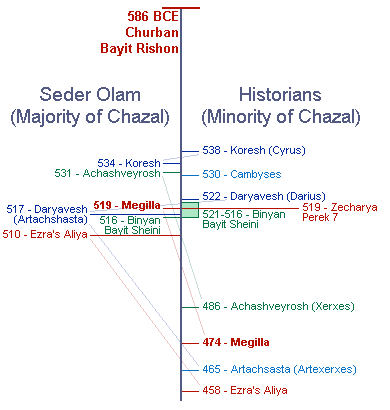
According to the chronology posited by Seder Olam, Ahashveyrosh was the king immediately after Cyrus but before Darius, and the story of Megillat Esther immediately led to the building of the second Beit HaMikdash and a mass Aliya. However, according to the common historical approach Ahashverosh was the king who succeeded Darius. The Beit HaMikdash was already built and two decades pass before any new Aliya movement. In fact, no major event takes place immediately after the events in Megillat Esther. However, parallels between Megillat Esther and the prophecies of Zekharya imply that the initiators of the holiday of Purim understood that the ultimate success of the Return to Zion and the rebuilding of the Beit HaMikdash depended on the implementation of social Mitzvot.
The Decline towards Hurban
Rabbi Alex IsraelThe last four kings of Yehuda struggle under the crippling hegemony first of Egypt and then of Babylon, suffering military defeat, vassalage, humiliation, deportation, siege and torture. The sun is setting on the First Temple period and it will swiftly end in the conquest of Jerusalem and the exile of its people.
Soon after Yehoahaz becomes king, Pharaoh Nekho makes his brother Yehoyakim the king placing on him a heavy tax. Yehoyakim and the higher strata of society lead a lavish lifestyle oppressing the regular people to pay the tax and for their lifestyles - something that the prophet Yirmiyahu fights against. Despite the growing power of Babylon and despite Yirmiyahu's prophecies, the people remain indifferent and believe the Beit HaMikdash to be invicible. Yehoyakim is removed by the Babylonian king and the child king Yehoyakhin rules for a mere three months. He, the skilled laborers and the vessels of the Beit HaMikdash are taken to Babylon beginning the exile of Yehuda and creating two centers - in Jerusalem with Tzidkiyahu and in Babylon with Yehoyakhin.
Mordechai and Esther
Rabbi Mosheh Lichtenstein | Hour and 8 minutesWhat makes Purim a special yom tov and why is it a day of festivity and celebration? Why is Purim unique as opposed to other days of Jewish salvation? Why is the megilla called Megillat Esther and not Megillat Mordechai? A close examination of the Purim story within its historical context provides answers to these questions, by understanding Purim as a celebration of the renewal of the covenant between Israel and God.
PERSIA
Shushan
The Importance of Fraternity: Parashat Mikeitz and the Story of Haman
Rabbi David SilverbergOverview of Megillat Esther
Gina Junger | Hour and 40 minutesWho is the author of Megillat Esther? What is the purpose of the Megilla, and why was it included in the Tanakh? This lecture places Megillat Esther within historical context and presents an overview of the structure and story. Through a close exploration of the text we notice a subtle but important message to the Jews living in Persia, and note its relevance throughout history and in present times as well.
Yosef, Mordekhai, and Binyamin
Rabbi David SilverbergAmalek and Esther
Elisheva BraunerMegillat Esther: Establishing Purim as a Holiday
Erev Shabbat Excerpts - Pekudei
Rabbi Jonathan Snowbell | 17 minutesWe delve into the end of Megillat Esther and examine the tension in establishing Purim as a holiday. What does it mean that Mordekhai is accepted by "most of" his brethren? What is happening when Mordekhai and Esther repeatedly send out the "letters of Purim?" How does Purim fit in with the prohibition to add to the Torah? What is going on with the Jewish people when Purim is first established, and how does that affect their reaction to Mordekhai and Esther?
The Census
Rabbi Tzvi SinenskyThe chapter neatly captures the fundamental tension running throughout all the accomplishments of the Shivat Tzion community. While the people’s achievements are remarkable, it is always a struggle, achieved against the backdrop of the significant challenges plaguing the community.
The Jewish return to Zion seventy years after the destruction is nothing short of miraculous. Still, fewer than 50,000 people in total returned, most of whom were lacking in means, leaving the community undermanned and lacking in resources to fend for itself.
The glaring gaps in the community’s genealogical records speak directly to some of the key challenges facing the community: intermarriage, mass ignorance, and the concomitant need to establish religious bona fides.
Introduction to Nehemya
Rabbi Tzvi SinenskyA cursory glance at the book of Nehemya makes it clear that many of the concerns encountered in Ezra remain relevant in Nehemya: the arrival of a new leader on the scene; opposition from the indigenous population; the importance and challenges of construction; censuses of the olim; and mass ignorance and repentance.
While both Ezra and Nehemya arrive under grave circumstances – each travels to Jerusalem at great personal sacrifice to guide a struggling community – there are a number of obvious differences between the two.
Upon hearing the news of the state of Jerusalem Nehemya launches into prayer. Nehemya, much more so than Ezra, laces his tefilla with rich allusions to prior Torah texts and personalities. The Jewish community was rudderless, lacking in leadership and direction, and unable to provide basic security for its residents. The only way he would feel secure in making his request from the king was by first invoking some of his outstanding predecessors throughout Jewish history: Moshe, Aaron, David, and Shlomo.
The Great Prayer and Confession
Rabbi Tzvi SinenskyAfter reading the Torah and celebrating Sukkot in spectacular fashion, the people remain behind, mourning and fasting for their sins. Those who had intermarried separate from their foreign spouses, and the community recites confession. The Levites proceed to offer a whirlwind tour of Biblical history, Notwithstanding the Jews’ unfaithful behavior, God remains compassionate and continues to provide.
Perhaps the most conspicuous aspect of the prayer of the Levites is the extent to which they draw upon earlier scriptural sources. The ideal is to anchor our prayers, as our actions, in those of the outstanding scholars of the current and previous generations. The prayer exemplifies the key role played by religious commitment born of deep understanding. As the curtain closes on the prophetic period, a new emphasis on the Torah tradition rises to the fore.
It was the leadership of the Shivat Tzion community that helped to renew the community’s commitment to Mosaic law as the touchstone for Jewish life and Jewish learning. Above all, this is the legacy of Ezra-Nechemia.
Our invocation of Nechemia during our daily prayers hints to the larger idea that the miracles of the exodus are not isolated events, but are but one piece of the compassion with which God graced His people throughout the course of history.
וַיָּשֶׂם֩ הַמֶּ֨לֶךְ אחשרש [אֲחַשְׁוֵר֧וֹשׁ ׀] מַ֛ס עַל־הָאָ֖רֶץ וְאִיֵּ֥י הַיָּֽם׃
Esther 10, verse 1
אַחַ֣ר ׀ הַדְּבָרִ֣ים הָאֵ֗לֶּה גִּדַּל֩ הַמֶּ֨לֶךְ אֲחַשְׁוֵר֜וֹשׁ אֶת־הָמָ֧ן בֶּֽן־הַמְּדָ֛תָא הָאֲגָגִ֖י וַֽיְנַשְּׂאֵ֑הוּ וַיָּ֙שֶׂם֙ אֶת־כִּסְא֔וֹ מֵעַ֕ל כָּל־הַשָּׂרִ֖ים אֲשֶׁ֥ר אִתּֽוֹ׃
Esther 3, verse 1
וּמָרְדֳּכַ֗י יָדַע֙ אֶת־כָּל־אֲשֶׁ֣ר נַעֲשָׂ֔ה וַיִּקְרַ֤ע מָרְדֳּכַי֙ אֶת־בְּגָדָ֔יו וַיִּלְבַּ֥שׁ שַׂ֖ק וָאֵ֑פֶר וַיֵּצֵא֙ בְּת֣וֹךְ הָעִ֔יר וַיִּזְעַ֛ק זְעָקָ֥ה גְדֹלָ֖ה וּמָרָֽה׃
Esther 4, verse 1
וַיְהִ֣י ׀ בַּיּ֣וֹם הַשְּׁלִישִׁ֗י וַתִּלְבַּ֤שׁ אֶסְתֵּר֙ מַלְכ֔וּת וַֽתַּעֲמֹ֞ד בַּחֲצַ֤ר בֵּית־הַמֶּ֙לֶךְ֙ הַפְּנִימִ֔ית נֹ֖כַח בֵּ֣ית הַמֶּ֑לֶךְ וְ֠הַמֶּלֶךְ יוֹשֵׁ֞ב עַל־כִּסֵּ֤א מַלְכוּתוֹ֙ בְּבֵ֣ית הַמַּלְכ֔וּת נֹ֖כַח פֶּ֥תַח הַבָּֽיִת׃
Esther 5, verse 1
בַּלַּ֣יְלָה הַה֔וּא נָדְדָ֖ה שְׁנַ֣ת הַמֶּ֑לֶךְ וַיֹּ֗אמֶר לְהָבִ֞יא אֶת־סֵ֤פֶר הַזִּכְרֹנוֹת֙ דִּבְרֵ֣י הַיָּמִ֔ים וַיִּהְי֥וּ נִקְרָאִ֖ים לִפְנֵ֥י הַמֶּֽלֶךְ׃
Esther 6, verse 1
בַּיּ֣וֹם הַה֗וּא נָתַ֞ן הַמֶּ֤לֶךְ אֲחַשְׁוֵרוֹשׁ֙ לְאֶסְתֵּ֣ר הַמַּלְכָּ֔ה אֶת־בֵּ֥ית הָמָ֖ן צֹרֵ֣ר היהודיים [הַיְּהוּדִ֑ים] וּמָרְדֳּכַ֗י בָּ֚א לִפְנֵ֣י הַמֶּ֔לֶךְ כִּֽי־הִגִּ֥ידָה אֶסְתֵּ֖ר מַ֥ה הוּא־לָֽהּ׃
Esther 8, verse 1
וּבִשְׁנֵים֩ עָשָׂ֨ר חֹ֜דֶשׁ הוּא־חֹ֣דֶשׁ אֲדָ֗ר בִּשְׁלוֹשָׁ֨ה עָשָׂ֥ר יוֹם֙ בּ֔וֹ אֲשֶׁ֨ר הִגִּ֧יעַ דְּבַר־הַמֶּ֛לֶךְ וְדָת֖וֹ לְהֵעָשׂ֑וֹת בַּיּ֗וֹם אֲשֶׁ֨ר שִׂבְּר֜וּ אֹיְבֵ֤י הַיְּהוּדִים֙ לִשְׁל֣וֹט בָּהֶ֔ם וְנַהֲפ֣וֹךְ ה֔וּא אֲשֶׁ֨ר יִשְׁלְט֧וּ הַיְּהוּדִ֛ים הֵ֖מָּה בְּשֹׂנְאֵיהֶֽם׃
Esther 9, verse 1
אַחַר֙ הַדְּבָרִ֣ים הָאֵ֔לֶּה כְּשֹׁ֕ךְ חֲמַ֖ת הַמֶּ֣לֶךְ אֲחַשְׁוֵר֑וֹשׁ זָכַ֤ר אֶת־וַשְׁתִּי֙ וְאֵ֣ת אֲשֶׁר־עָשָׂ֔תָה וְאֵ֥ת אֲשֶׁר־נִגְזַ֖ר עָלֶֽיהָ׃
Esther 2, verse 1
וַיִּכְתֹּ֣ב מָרְדֳּכַ֔י אֶת־הַדְּבָרִ֖ים הָאֵ֑לֶּה וַיִּשְׁלַ֨ח סְפָרִ֜ים אֶל־כָּל־הַיְּהוּדִ֗ים אֲשֶׁר֙ בְּכָל־מְדִינוֹת֙ הַמֶּ֣לֶךְ אֲחַשְׁוֵר֔וֹשׁ הַקְּרוֹבִ֖ים וְהָרְחוֹקִֽים׃
Esther 9, verse 20